Showing posts with label therapy. Show all posts

27 September 2007

X Marks the Spot

There's an old saying that states, "Opinions are like assholes; everyone has one." I'm in the minority of people that have two. Assholes, not opinions. Well, one asshole, one hole in my ass...I guess it's more of a crater than a hole.

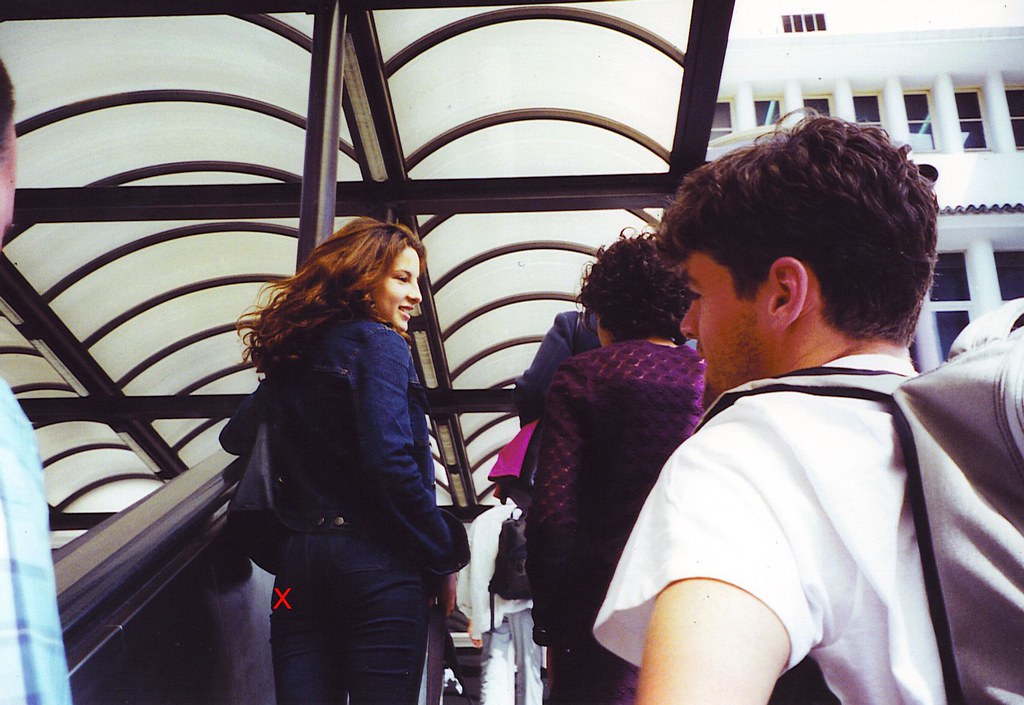
The medical term for the sore is ischial pressure ulcer, grade IV. What makes people in wheelchairs particularly susceptible to getting pressure sores is the fact that paralysis prevents most people from sensing when an injury to the skin occurs. The poor blood circulation in the area caused by continuously being seated accelerates the speed of the tissue breaking down, hinders new tissue growth, and adds to why these types of sores are so difficult to get healed up. The location of my sore has also been extremely problematic in contributing to it's breakdown as well as it's protracted recovery time. The red X on the attractive Moroccan girl in this picture, me captured rudely ogling her cake, is an approximation of where my sore is located, if she were me.


(Click for a better view)

It started as an irritated patch of skin then through a combination insufficient cushioning and the neglect of out-of-sight,-out-of-mind the skin broke down and a sore opened up. For about a week it was a superficial skin abrasion. At the end of two weeks it was about the size of a quarter and I scheduled a doctor appointment. The doctor discovered that some of the tissue inside the sore had started to die and after cleaning it out and giving me instructions on how to dress it, encouraged me to stay off of it as much as possible - not the easiest set of medical advice to follow in my situation. My bad, it turns out, and when I saw the doctor again ten days later, the sore had deteriorated significantly, was now a centimeter deep in one spot and there was more necrotic tissue. A third visit, the next week, showed more deterioration of tissue and the depth of the sore had increased as well. The hope in treating it was to keep it from getting to the point where surgery was necessary to help it heal properly.

Well, to make a long story short, the month of days spent mostly lying on my side so as to not put unnecessary pressure on the sore, multiple wound dressing changes, way too much TV, and no social life helped to decreased the circumference of the sore, but a MRI scan revealed osteomyelitis in the ischial bone underlying the sore. In layman's terms, a bad infection in the bone that, while localized for the time being, if it were to spread further would be real bad. So, in a week and a half I'm scheduled for surgery to remove the infection. That will be followed up by more lying around doing nothing as the sore attempts to heal properly. I'm looking at mid-November by the time I'm back to full steam.
17 July 2007

New Developments In Ambulation

A few weeks ago I spoke to Dr. Carlos Lima who performed my olfacotry cell transplant surgery back in April 2005. I asked him what specific types of excercises his patients in Europe were doing therapy-wise in their quests to regain mobility. His recommendation as to how to get the greatest potential benefit out of the surgery is that body must re-learn the movements it lost from the paralyzing injury. For instance, if the legs don't move because they are paralyzed the best way to regain potential function is to get them moving in a walking motion. Sit and do nothing and nothing will happen. The theory is that even if the original neural pathway is damged, putting the legs through the walking motion may help the nervous system open up and develop new pathways to the brain: reverse engineering or kind of like creating a neural bypass. This can be accomplished in a varitey of ways, like unweighted treadmill training, riding FES bikes and the like. I have utilized KAFO braces for assisted walking and standing exercises for two years now, and although Dr. Lima is not against the benefits of incroporating braces into the therapy program he has stressed that many of his european patients do not use leg braces in their therapy routines. His contention is that the braces do all the work of bearing the body weight and thus the legs don't get used to supporting the body.
When I asked him to suggest excercises that his European patients were having success with I was relieved that, for the most part, my therpy sessions included similar activities. He reassurted me that I was doing the right things, but then he also sent me a video clip of a patient of his, a C4 level quadriplegic, assited walking without legs braces eight months after her transplant operation. After watching the clip, I determined that there was no reason for me not to try the same thing. So, for the past month I have been doing my assisted walking without the KAFO braces I used in the past.
Using the braces I was getting to the point where I would be able to cover a couple hundrd feet before my shoulders reached their point of fatige. I went from swinging both of my legs at the same time to alternating gait, which I demonstrated here. I also started to notice a real improvement in my balance through my hips and when standing still, while utilizing a platform walker for upper body support, I can control my balance to the point where I don't need anyone supporting my hips to help keep me upright.
Assisted walking without the braces is different though and more fatiguing because all of the support and rigidity that the braces provide is gone. The weight of the braces and the fact that the legs are fixed at full extension contributed to the swing part of the walking gait once I was able to get momentum headed in a forward direction. Without the leg braces and without any voluntary function the knees want to buckle under the body weight and so getting the leg to swing forward is much more strenuous and difficult. What I concentrate on doing when not wearing the braces is shifting my weight side to side and trying to create a hip turn with my abdominal muscles to pull my trailing leg forward. Right now though, the majority of the hip turn I'm getting is coming down from turning my shoulders. When I have significant spasticity in my legs the contractions of the muscle spasms help me to lock my knees out and straighten up my back and at those points I'm able to bear most of my body weight with my legs. The spasticity is sporadic though and so 90% of the time while I'm walking, my PT has to assist with not only swinging my legs forward, but locking out my knees as well. Because of the style of walker we are using with this type of exercise I'm also doing less in terms of controlling my balance at the hips as the walker has a strap that can be used to lock my hips in a secured position. In the long road though, I hope this will help me accomplish more as now my legs are being forced to support the majority of my body weight as I go through a more natural walking gait pattern.
This is what it looks like:

28 January 2007

Me Tube

Turns out, I'm fascinating -- or at the very least, attention-sustaining in two- to three-minute bursts. Since posting my bedside dressing trilogy a week and a half ago, the video clips have received nearly 3400 viewings on YouTube. I haven't done the necessary research to confirm whether that running total is gangbusters for your average, extreme-niche YouTube video clip or not (obviously it will never be Dick In A Box, numbers-wise, but you've got to start somewhere). A dozen of those aforementioned viewers went so far as to subscribe to my YouTube "channel" in, what I can only surmise to be, anxious anticipation of future offerings from me of grainy video clips augmented with bomb-assed soundtracks.

Well, I've answered. For it's grainy video I have and a massive library of bitchin' tunes at my disposal, with which I've cobbled together yet another surefire interweb video classic. Some of you may remember the footage that comprises the beginning of this new clip from the twelve-minute docu-drama DY's Rehab Video featured on this very website in the spring of last year. What you didn't see then is new footage, recorded and catalogued over the course of this last year, documenting what might be construed by some as "progress." Call it DY's Rehab Video - Redux: this time around featuring hi-tech digital transition effects, new informative captions, less talking, and more -- all in a concise, under four-minute run time.


Feast your eyes on this!


(by the bye, according to the troubleshooting guide on YouTube there is nothing that can be done at this time to change the video screenshot, aside from re-editing and slightly shortening the video - decidely not worth the effort)

05 March 2006

DY's Rehab Video


Click here to view video

This may take a few minutes to download; so after you start the download go make a sandwhich and by the time you're done the video should be ready to view.